The Records Department Woodstock
Record store in Woodstock, IL
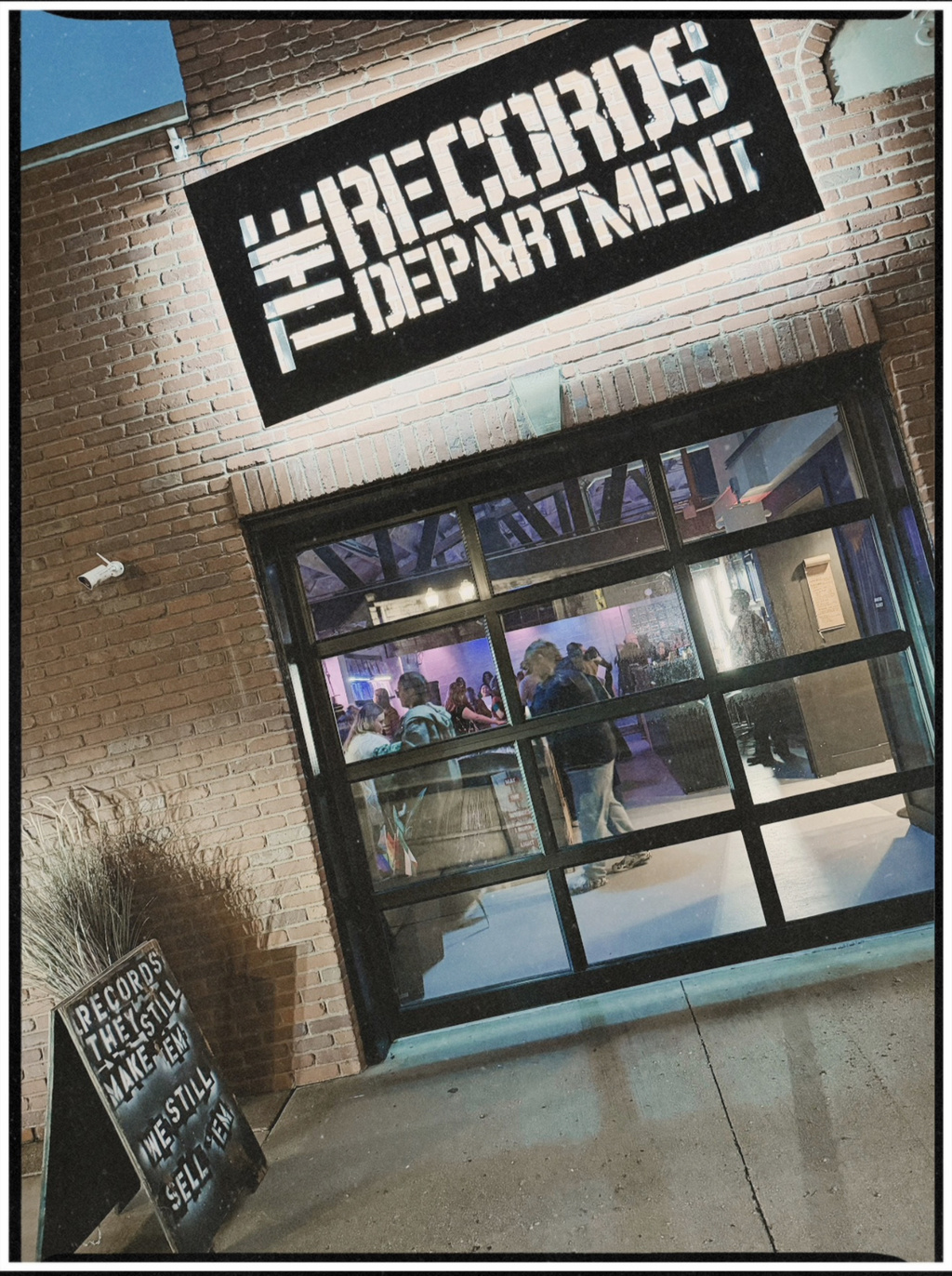
216 Main St, Woodstock, IL 60098, United States, Woodstock, IL 60098
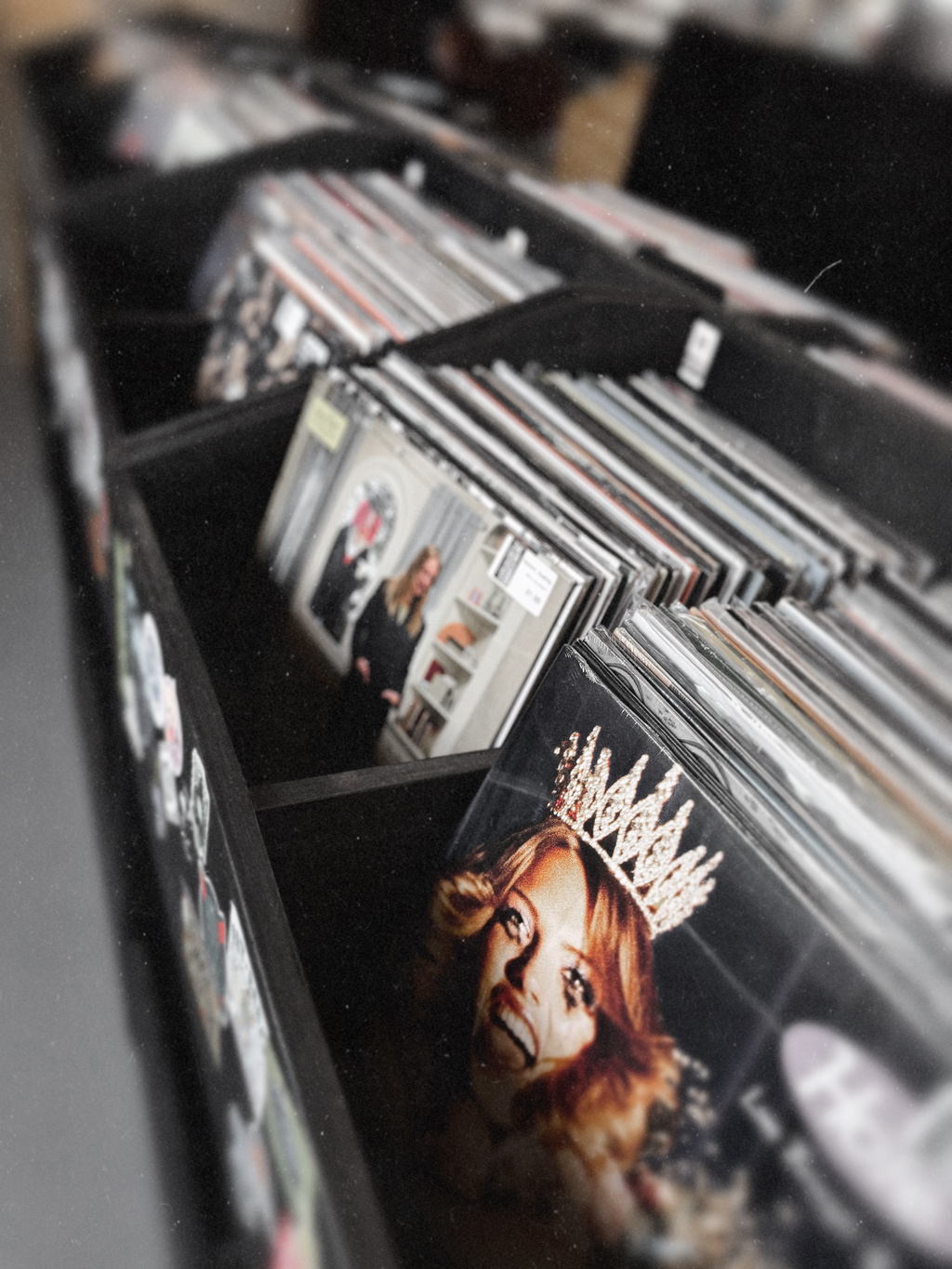
The Records Department Woodstock is a new-vinyl shop built around alphabetical browsing rather than genre sections. Its shelves pair releases from major and independent labels with local musicians' work, inviting visitors to discover records beyond the categories they already know.
Interview with The Records Department Woodstock
The Records Department has a very specific stance — not sectioning the store by genre, mostly new vinyl from a curated set of major and indie labels, aiming for a younger, hipper crowd than the classic dusty-record-store archetype. That's a real position to take. What was the thinking behind refusing genre sections?
It started as a practical decision. The traditional wisdom that a record store should be divided by genre just never really sat right with us. From a retail perspective, we couldn't see our store flowing naturally that way. Culturally, genres are fluid and constantly evolving, so there would never be a way to cleanly and accurately separate everything anyway. At some point, you're making arbitrary decisions about where a record "belongs."
As we leaned further into our "No Genres, No Masters" ethos, we realized the simple alphabetical organization was actually helping create the kind of experience we wanted. Customers tell us it makes discovery easier because you're exposed to everything. You might go looking for a record you already know and stumble across something completely outside the lane you normally put yourself in.
Genre can be useful for describing music, but we don't think it needs to become a fence around it. We would rather have people wander through the whole alphabet than self-segregate toward whatever already feels familiar and comfortable.
The Woodstock Square is famously the Punxsutawney of Groundhog Day, and it's one of the most-preserved historic town squares in the Midwest. For someone visiting the shop, what else on the Square or nearby is worth their afternoon?
Obviously, you have to do the Groundhog Day tour at least once. The filming locations around the Square are marked with placards describing the scenes that were shot there, and there are little homages to both Woodstock Willie and Punxsutawney Phil sprinkled throughout town. It's fun even if you've seen the movie a hundred times because you start recognizing just how much of Woodstock is actually in it.
But Woodstock is more than a movie set. It's still a functioning downtown with independent shops, restaurants, coffee, art and people actually hanging around. That's one of the things we like about being here: you can come to Woodstock because you love Groundhog Day and accidentally discover a town worth coming back to after the novelty of the movie wears off.
You've been direct that Woodstock's community around the shop is "interesting and diverse" and that the shop attracts a younger crowd than the traditional record-store demographic. What does that actually look like day to day, and what surprises you about who becomes a regular?
It really is everything. Our regulars are creatives, tradesfolk, parents, students, teachers, bums, lawyers and everything in between—and most of them are probably wearing several of those hats at once. What matters is that they can see some part of themselves reflected in the stacks. Then somebody notices a record another person is holding, a conversation starts, and suddenly two people who might never have met otherwise have something to talk about.
We also believe pretty strongly in trusting the youth. We make space for younger people and encourage them to make this place their own. After all, this world is already theirs. We'd rather they look back kindly on this little spot than have it become another reason they couldn't wait to get out of Woodstock.
What has surprised me is how many "big-age" folks are looking for exactly the same experience. They're not necessarily coming in to rebuy the records they owned when they were 20. They're asking us what's happening now. They want new music, new experiences and recommendations, while also sharing their own musical history with us.
The best version of a record store isn't young or old. It's where those experiences get traded back and forth.
Stocking mostly new vinyl from Flail, Sub Pop, Polyvinyl, Fat Beats, Relapse, Traffic — that's a specific taste set, not just a distribution list. Walk us through how a label ends up on your regular rotation.
It's really as simple as: it's what we and our customers are into.
We don't want the inventory to feel like somebody handed us a list of what a record store is "supposed" to carry. A label ends up in regular rotation because we trust what they're putting out, their records consistently connect with our customers, or they've developed an identity where we'll take a chance on something simply because their name is on it.
That creates a feedback loop. We bring in something because we believe in it, customers discover it, they come back asking what else sounds like it, and that teaches us where to dig next. Curation isn't us standing behind the counter declaring what's cool. It's an ongoing conversation between us, the labels, the artists and the people walking through the door.
The local musicians section — including local jazz — is worth a real conversation. How does a local artist actually end up in the bins at The Records Department, and what have you learned about running that section?
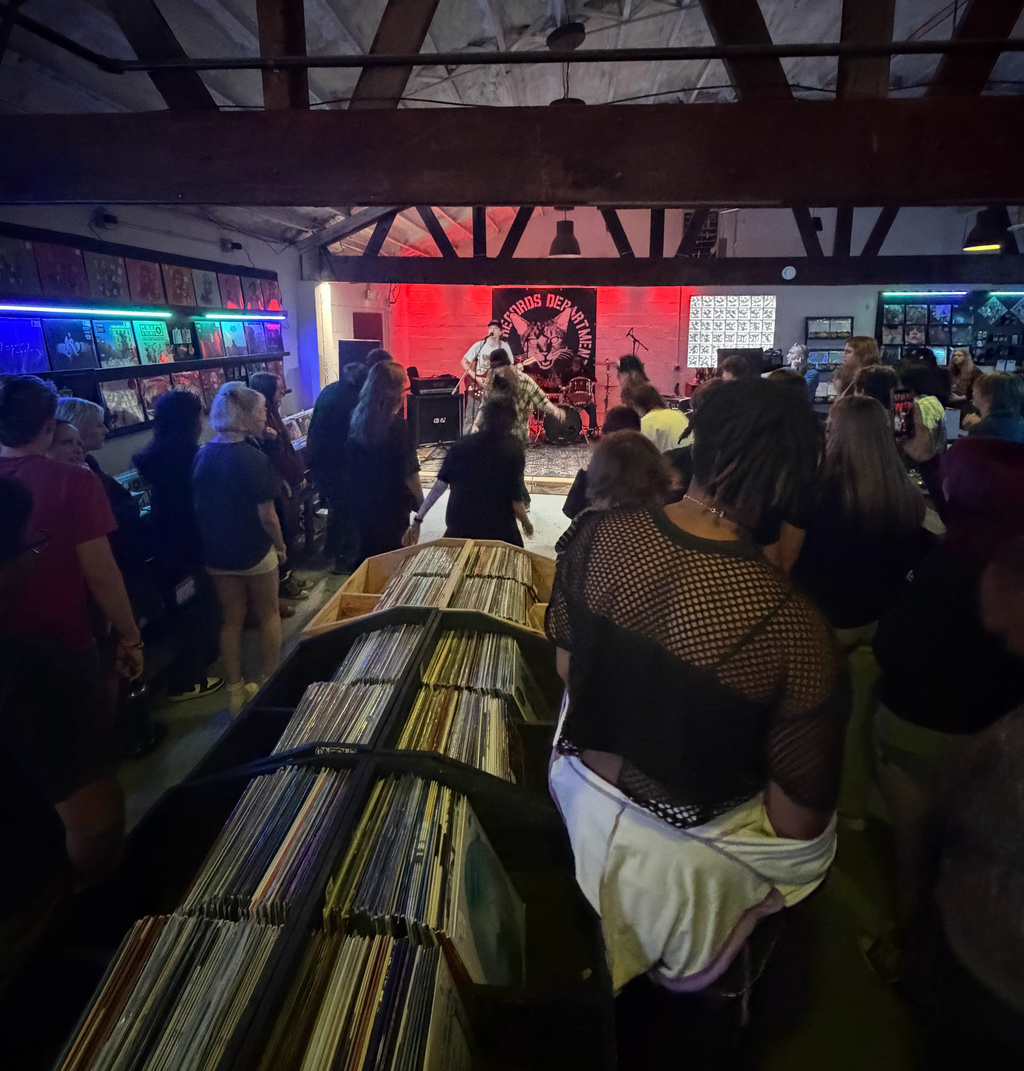
The local musicians who wind up featured in the shop are usually customers first. They're participating in the experience with us, coming to shows, buying records, talking about music and becoming part of the community. Eventually we learn that they're making music themselves.
When we get to know people and understand what they're working on, we try to give those efforts some space. That might mean having them perform here, helping introduce their music to people, or, if they've released something on physical media, buying a few copies and putting them in the bins.
For us, investing in the music industry has to mean more than buying records from distributors. If we're going to say we support music, that should include supporting the musicians who are making it around us.
And we think there's something powerful about putting those records right alongside national acts. A local musician shouldn't automatically be treated like a novelty or relegated to a corkboard by the bathroom. Their record deserves the opportunity to sit in the stacks next to artists touring the world. The distance between "local band" and "band you love" should sometimes be as small as somebody putting the record in your hands.
In a shop built around new vinyl rather than used, the whole "we buy collections" side sits differently. Do you buy at all, and if so, what shape does that take?
We actually don't buy collections anymore. Over the years we've moved almost entirely away from the used side of the business, and that's become a pretty deliberate part of what The Records Department is.
We're fortunate to sit near several other record shops that primarily operate on the traditional buy-sell-trade model, and they're fantastic stores with worthy finds and vibrant communities of their own. We don't need to duplicate what they're already doing well.
The used-record business is also a fundamentally different way of building an inventory. You're working with what comes through the door and playing the odds that somewhere among grandma's moldy Christmas records and another copy of Frampton Comes Alive! you'll uncover that great, sellable record somebody has been hunting for. There's an art to that, and the shops that do it well are incredibly good at it.
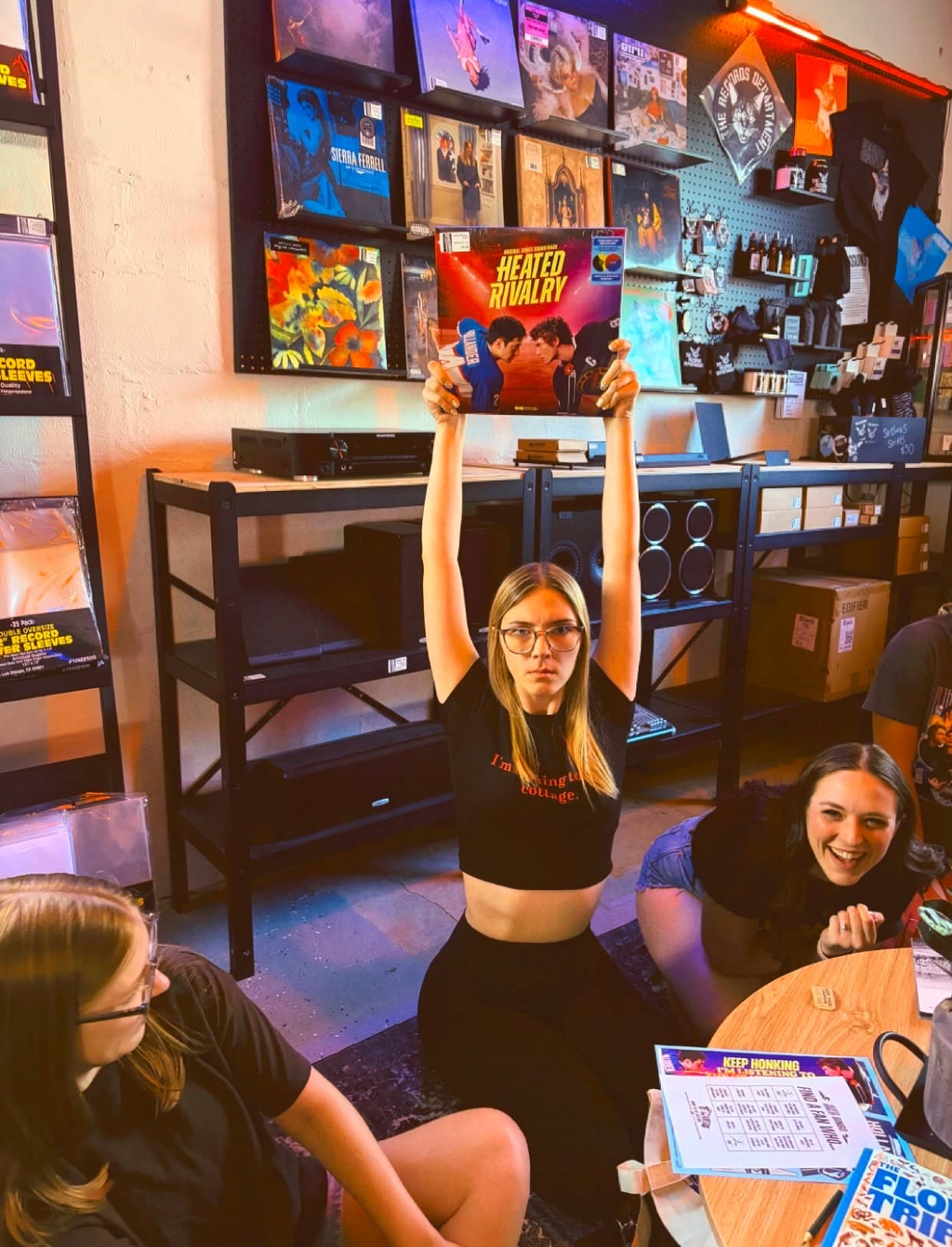
Our strength is on the other side of that equation. With new vinyl, we can be intentional about nearly every record that enters the shop. We can respond to what people are listening to right now, take chances on small labels and emerging artists, go deeper when something connects with our customers, and make sure the records occupying our limited space are there because we believe somebody should hear them.
For us, that's what curation really means. Instead of waiting for the right records to find their way to us, we get to go out and find the right records for our customers.
That's our lane, and it also gives the other shops around us room to be great at theirs. We don't need to be the only record store around. We just need to give people a reason for this record store to exist.
Since new-vinyl pricing is more transparent than used, the shop's value is really the curation. What's a small-label release you sell that you wish more people knew about?
We're really excited about Gatta Morta, the new project featuring members of the Melvins, Butthole Surfers, Big Business and Mr. Phylzzz, who put out a record this month through Amphetamine Reptile. It's exactly the sort of weird, heavy, interesting record that makes running a shop like this fun.
Our friends in Mr. Phylzzz and ShrineBurner are also set to release albums this year, and we're not-so-patiently waiting for both.
And I'd absolutely point people toward Carl Hauck's Death Farm from last year. It's this quiet comedic tragedy that feels like sitting in your living room sharing gallows humor with friends. It's the kind of record that might never be the biggest title on the wall, but someone hears it and suddenly it belongs to them.
Those are the records that make curation worthwhile. Anybody can tell you what the biggest release this Friday is. A good record store should also be able to hand you something you didn't know you were looking for.
For someone visiting Woodstock and trying to actually get the town — beyond the tourist Groundhog Day angle — where would you send them?
I'd tell them to spend the afternoon walking and let the downtown unfold a little bit.
Catch a cuppa at Wheelhouse Pottery and Coffee, play a game at GriffoNest Games, find something good to read at Read Between the Lynes, check out the ceramics at Artisans on Main, and wander through Material Things for more local art and handmade work.
The common thread is that these are independent places with actual personalities. That's the Woodstock we like—the version where you walk into a place because you're curious, talk to whoever is behind the counter, and leave knowing about another place you should visit.
You can absolutely come here to stand where Bill Murray stood. We just hope that isn't the most interesting thing that happens to you while you're here.
Last updated: 2026-09-06
Store owners

Add a VinylPackman badge
Use this small badge on a Press, About, Links, or News page to point visitors back to the feature.
Need to fix store details?
Owner or staff? Send a correction for review.
Selling records?
Need help before you contact stores?
Use the seller guide to compare local buyers and send a simple collection request.
Stores near The Records Department Woodstock
| Title | City | Distance |
|---|---|---|
| Vinyl Frontier Records | McHenry | 8 miles |
| Reef Records Lakemoor | Lakemoor | 12 miles |
| Black Circle Records | Lake Geneva | 19 miles |
| Scratched Vinyl | Barrington | 20 miles |
| Offbeat Music Store | Lake Zurich | 20 miles |
Nearby Cities: Woodstock, Bull Valley, Wonder Lake, Lakewood, Crystal Lake, McCullom Lake, Marengo, McHenry, Prairie Grove, Huntley